
1
Velázquez puts himself in the picture
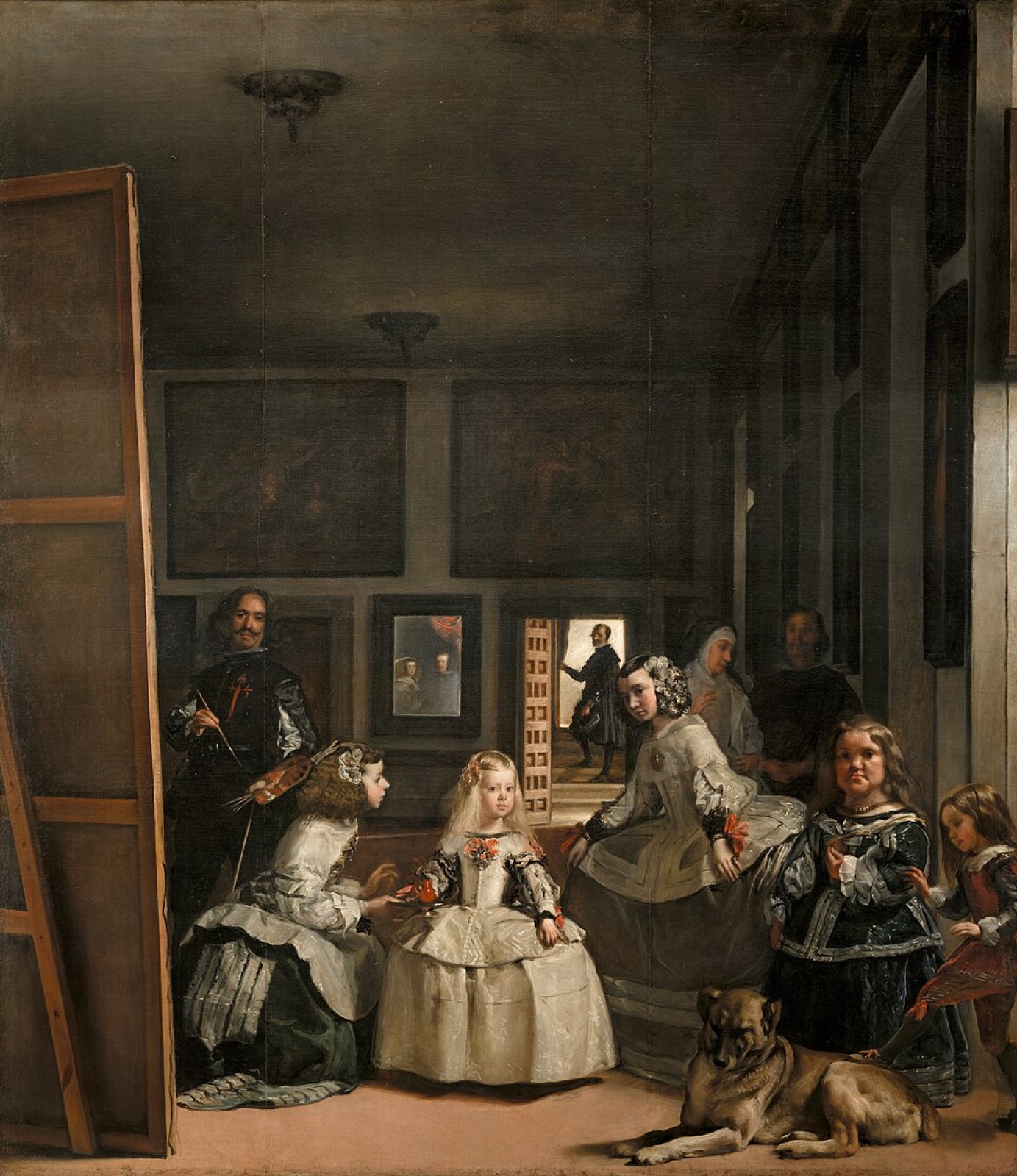
Velázquez does not hide as a secondary witness. He depicts himself standing, brush in hand, before a canvas so large that it almost competes with the painting we are looking at. By placing himself beside the royal family, he raises the painter from craftsman to intellectual creator and courtier.
On his chest is the red cross of the Order of Santiago, an honour he received in 1659, three years after the painting was dated. The cross was probably added later; tradition even claims it was painted on the orders of Philip IV. Whether or not that story is true, it completes the artist’s ambition: Velázquez does not merely paint power; he claims a place within it.